Please pass along this article to anyone you think may be interested!
It was published Friday, July 4, and I have already received several responses from people wanting to help.
Thank you,
Jay
Source: The Kingston Whig Standard
Date: July 4, 2025
Athletes are shouldering the heavy financial burden themselves, turning dreams into costly gambles, Olympian says
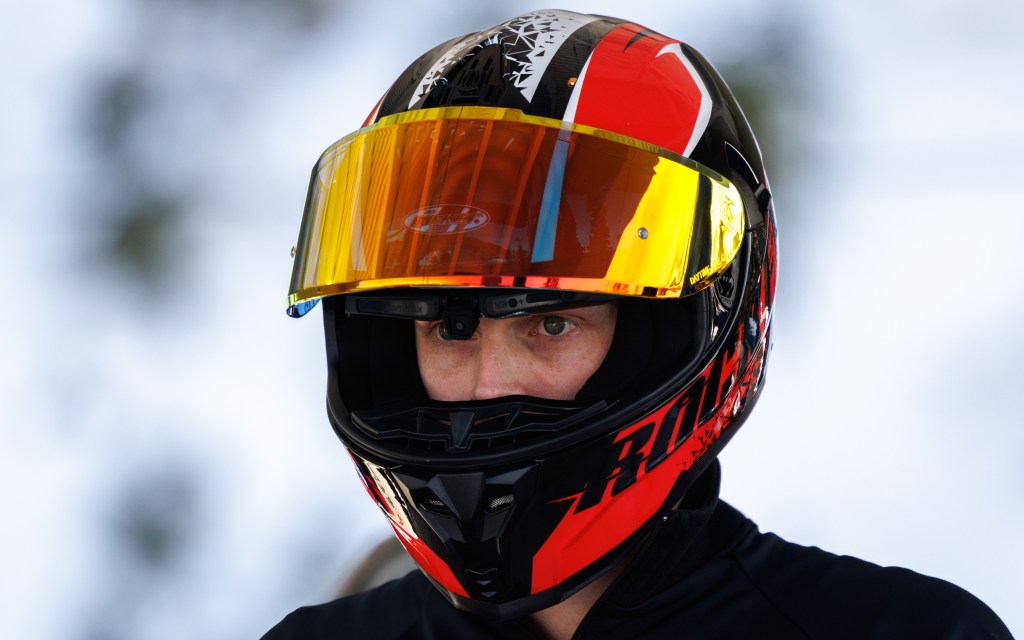
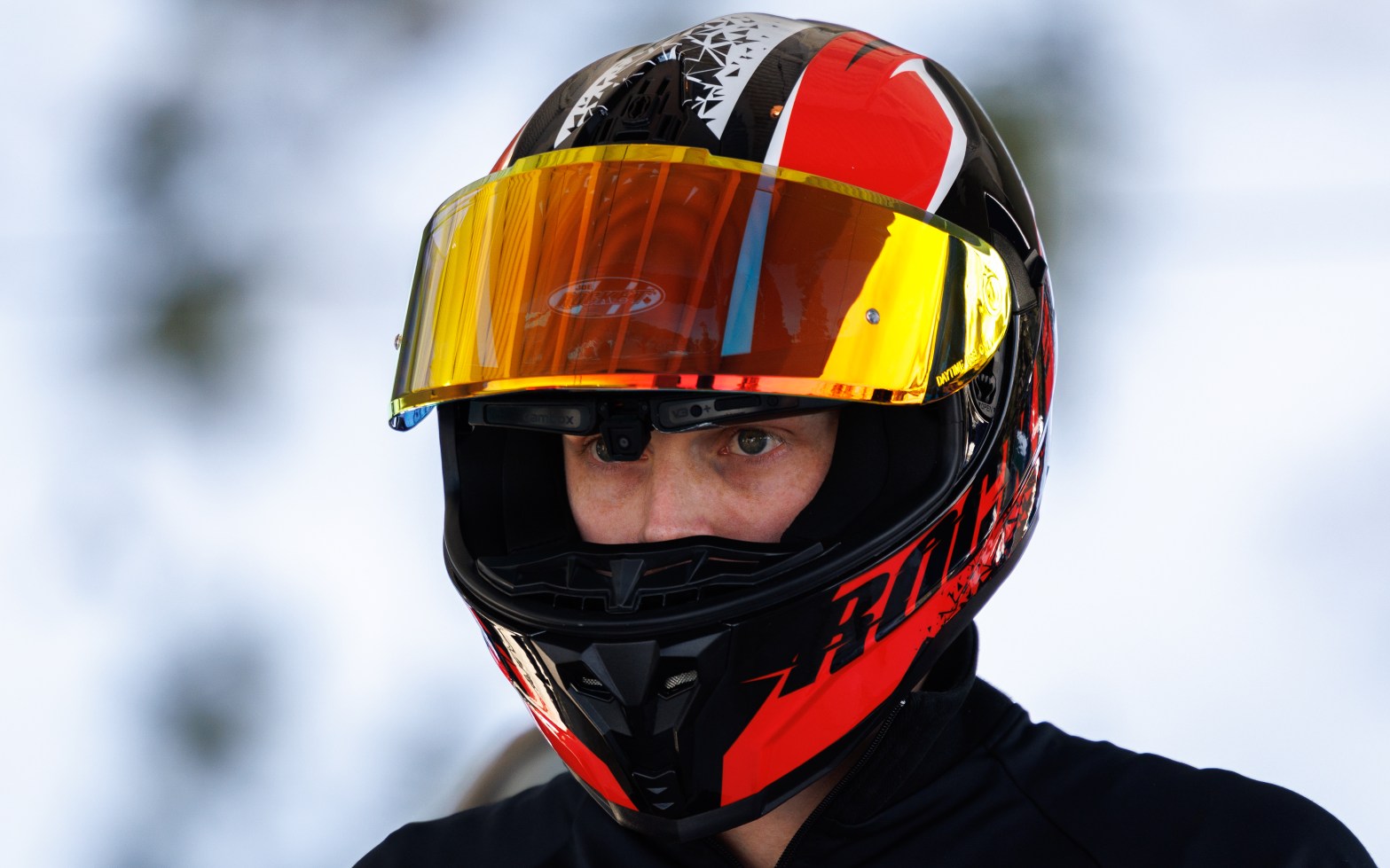
Photo taken at North American Cup Race in Park City, UT (January 2025)
Photo Credit: Michael Ritucci – Park City, UT
Behind the Olympic dream lies a stark reality for athletes like Jay Dearborn, a Yarker resident and former Canadian Football League player for the Saskatchewan Roughrider-turned-Canadian Olympic bobsleigh pilot.
With limited government funding and few major sponsors, he and many others must personally cover tens of thousands of dollars just for the chance to compete. For them, the path to the Games is as much a financial gamble as a physical battle.
To overcome this, Dearborn is turning to Kingston-area businesses and his community, seeking sponsorship and support to keep his Olympic hopes alive.
Dearborn still remembers the surreal rush of walking into the stadium at the 2022 Beijing Winter Games. The stands were nearly empty — COVID-19 restrictions kept crowds at home — but as he looked up and waved, the weight of months of training and anticipation hit all at once. It was, he said, the kind of moment you dream about.
“Everybody’s just bubbling and excited and chatting with each other and you’re meeting athletes from all different parts of Canada and different sports,” he recalled in an interview with the Whig-Standard. “It was a really, really cool, special experience.”
But standing at the heart of the Olympics comes at a steep cost, Dearborn explained. This year, many athletes are taking a financial gamble — paying out of pocket for training and travel with no guarantee of making the team, and no clear promise of a refund if they don’t, he explained.
“We’re (athletes) being told $30,000 just to have the chance to try out for the team to then hopefully get to go to the Olympics … and we’re being asked to front, I believe, $20,000 of that $30, 000 before the team is even named. And with no real talk of being refunded if you’re released,” Dearborn said.
And beyond the upfront gamble just to earn a shot at the team, Dearborn says the ongoing costs of staying competitive in such a specialized, equipment-heavy sport only deepen the financial strain.
“The sport of bobsleigh is incredibly demanding, not just physically, but financially,” Dearborn said. “To remain competitive in this highly technological sport, the costs are substantial. My team fees alone are $30,000, and I anticipate needing to spend an additional $15,000 on essential equipment upgrades.”
Now 31, Dearborn said he feels the weight of that $30,000 price tag more than ever, knowing that money could instead go toward a down payment on a home or paying off student loans — life-changing expenses for many.
“Athletes are struggling right now. It’s a huge investment, or not even an investment, rather a huge gamble, essentially to pay,” he said.
For Dearborn, each he continues this work feels like he is setting money on fire — delaying a more stable career path with benefits like a pension or retirement savings. He noted that many people overlook the long-term financial trade-offs involved. He explained how bobsleigh as a “late-entry sport”— meaning most athletes come post-university education or are directed from a different sport — is impacting how athletes are able to fund their Olympic journey.
“It’s a bit different for a 19- or 20-year-old to kind of go out and have fun, being told to not worry about saving their money,” Dearborn said. “But for bobsleigh, specifically, the older athletes (have) other plans, like expenses that they’re trying to balance and now we’re being told (to spend) $30,000, (which) is an insane amount of money. Think if somebody handed you 30 grand, like, what, you could do with that tomorrow?”
That $30,000 hurdle is one Dearborn isn’t sure he will be able to clear.
“The stakes are a little higher, right? I don’t know what my breaking point is, I’m not sitting on a pile of cash that I can just kiss goodbye and not even think twice about spending. For me specifically, I am at pretty good odds of making (the team), but I don’t know if I’m spending that money,” he said.
Dearborn went on to explain that unlike high-profile athletes with major sponsorship deals, he’s taking a grassroots approach to funding — what he calls the “drops in a bucket” method. Rather than holding out for a few big-name sponsors, he’s focused on securing support from a wide range of smaller businesses and individuals, particularly in Kingston and the surrounding area. His goal this summer is to find around 20 sponsors to help cover costs.
Dearborn explained that the bobsleigh program is almost entirely dependent on government funding and support from National Sport Organizations (NSOs). Unlike sports such as hockey, where community teams pay registration fees that help fund the national program, bobsleigh lacks a grassroots system to generate steady revenue.
“There’s no house league for bobsleigh,” he said. “We’re responsible for creating and chasing our own funding.”
He noted that government support has been declining sharply in recent years, and the program hasn’t been able to secure major financial sponsors. In February, the CBC reported that Canada’s Olympic sports are facing a funding crisis, with NSOs facing a $329M deficit in next five years.
Dearborn is frustrated that the burden of financial shortfalls has fallen so heavily on the athletes themselves — a trend that is becoming common amongst other Olympians. He added that conversations around the growing financial barriers to Olympic participation are becoming more common, affirming that “paying to play” is shaping how Canadian athletes are able to participate at the world’s highest level of sporting.
“It costs $130, 000 for a new bobsled,” Dearborn said, a piece of equipment he explains that depreciates in competitiveness with each Olympics and needs to be replaced approximately every four years.
“People will buy a brand new sleds and then basically trade them in, so sell them off to a country who can’t afford a brand new sled but can afford one. Then take that money and put it towards you buying a new sled. I think that’s typically how it works so the sleds kind of make their way down through the ranks of countries.”
In order to fund his aims at attending the Olympics again, Dearborn is working a job but is chasing sponsors in Kingston, explaining how getting a job and then having to request five months off at a time is not the easiest task.
“It’s tough to find a job that you feel like you are moving your career forwards in or at least getting career-related experience and then have to ask for five months off, basically. A lot of athletes work kind of the whenever they can find part-time contract minimum wage work in the summers. The jobs that athletes are working typically aren’t career-based, high-paying jobs,” Dearborn said.
Dearborn said he’s trying to help people visualize what their support really means — not just in dollars, but in national spirit.
“I want people to think about that feeling we all get every four years when we watch someone from a small town in Canada — maybe even someone from Kingston — competing on the world’s biggest athletic stage,” he said. “It’s that goosebump moment, the national pride, the excitement of seeing a Canadian athlete in a sport you only watch during the Olympics.”
He hopes that by tapping into those emotions, people will better understand the reality behind the scenes.
“Most people assume we’re fully funded by the government,” he explained. “But we’re not — and many NSOs are struggling.”
For Dearborn, this is also personal. He grew up in Yarker, just outside Kingston, and he’s now leaning on his community to be part of his journey.
“This is where I was raised, and now I’m asking that community to stand behind me, to help carry this dream forward — to Italy, to the starting line, and hopefully, to the podium.”
Community support isn’t just encouragement, according to Dearborn—it’s essential to making the Olympic dream possible.
To support his Olympic dreams, Dearborn has set up a fundraising page.
Article By: Sarah Adams
 Jay Dearborn
One thought on “Yarker Olympic hopeful seeks community support to overcome financial barriers for 2026 Games”